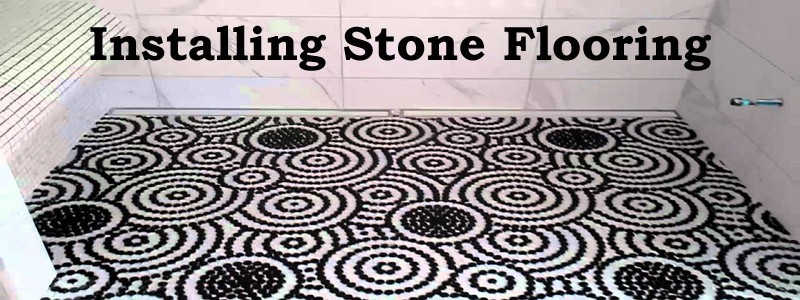
| When you take into consideration the expense of owning it, installing stone flooring yourself may just seem like the right course of action to take. The problem is, though, that you need the knowledge to back up the willpower.It is essential that you invest the time and the money in learning how to do it as well as having the right tools. Failure to install best stone flooring, proper can and will lead to the stone cracking, becoming loose, or becoming unevenly, which can cause someone to fall and be hurt. |
What’s Under There?
Installing stone flooring happens in the same way, whether you are installing slate or marble flooring, or virtually any other type of stone. The pieces of the best stone flooring are either laid in their natural form or are made from real stone that is suspended in a polymer binder to create a tile like an option. In all of these cases, the flooring needs to be laid carefully and accurately. If it is not supported or it is uneven, the finished product will not be that of high quality. And, you are increasing the risks of it breaking or chipping under pressure. No matter how hard the stone is, it can crack if it is laid improperly.
It is essential that you invest the time and the money in learning how to do it as well as having the right tools. Failure to install stone flooring properly can and will lead to the stone cracking, becoming loose, or becoming uneven which can cause someone to fall and become hurt.
What’s Under There?
Installing stone flooring happens in the same way, whether you are installing slate or marble flooring, or virtually any other type of stone. The pieces of stone are either laid in their natural form or are made from real stone that is suspended in a polymer binder to create a tile like option. In all of these cases, the flooring needs to be laid carefully and accurately. If it is not supported or it is uneven, the finished product will not be that of high quality. And, you are increasing the risks of it breaking or chipping under pressure. No matter how hard the stone is, it can crack if it is laid improperly.
It is important to see what is under your foot when choosing stone flooring for your home. First, you need to take into consideration the weight of the stone. The heavier the stone, the more pressure you are placing on the structure of the building. In some cases, the weight may be too much. If you are concerned about this, it is wise to consult with a professional before making a selection. Often, a thinner layer of the stone tile can be used in place of the heavier options.
Secondly, when installing stone flooring, you need to think about what is directly below it. Because they are heavy and rigid, they need a very strong support system to keep them in place. The base product can not move or shift. Those applying stone on a wood subfloor need to reinforce it with another layer of plywood in some cases. Then a layer of tar paper is laid, followed by a wire mesh. A layer of mortar is then used (although a cement backer board can be used as well) to provide even more support. Then adhesive (the proper quality of course) is used to put the tiles in place.
If installation is to be over a concrete floor, you can use the same such methods or you can use a thin set adhesive.
In most professional projects, the installer is likely to use mortar bed. Also important to note is that in this case, the 3/4″ plywood subfloor is the thinnest option.
A cement backer is a good option to use if you are looking for an easy to install solution. The subfloor needs to be 5/8″ thick here. You will apply the cement backer board to the subfloor with an adhesive and screws. Your stone is then applied to the backer with thin set adhesive.
In virtually every type of stone flooring you will want to sealants over the top of the flooring. When they are applied before the grouting application, it becomes easier for you to keep the grout out of the cracks and grooves of the actual stone. Once the proper sealants are used, you can then grout the flooring.
There are many types of flooring from epoxy stone flooring to slate, marble, and flagstone. The proper installation of stone flooring will allow for your floor to last as long as possible. In most cases, properly installing stone flooring will allow it to last a lifetime.
Greg,
Most home centers should have some type of motar repair adhesive you can use to reset a stone or two. If you do use new grout on those two stones, it may not match the rest of the area. Also, to protect the stones, you may need to reseal them.
Hi. I have a cabin that was built in 1860 and the floor is rock which we think was collected from around the property. It is laid tightly over a dirt/clay floor. I have been investigating ways to seal the floor and came across your website. I really don’t want to pull all the rocks up in this process, it would be hours and hours of extra work. Is it possible for me to seal the floor with the Diamond Coat Varathane Polyurethane without having cement under the rock?
Thanks for any advice you can give.
Cynthia
Cynthia,
In virtually every type of stone flooring you will want to apply sealants over the top of the flooring.
But, I would check with the manufacturer to be sure that any moisture coming through the stone will not harm the sealant.
Hello Floooring Lady,
I am installing 3/4″ flagstone in an entry way and 1″ as floor protection for a woodstove. The stone will be set on a cement backerboard.
1. What is the minimum depth of mortar recommended?
2. Is the best means of application like tile in which the mortar is spread on the backerboard and a final pass is made with a notched trowel?
3. If a notched trowel is used, what size notch would be recommended?
4. Is the grout the same as what is used for tile?
5. Do you have any special techniques to get the best adhesion when setting the stone?
Thanks in advance,
Lonnie