The Flooring Lady
The Flooring Lady
helps you figure out what to put
under your feet

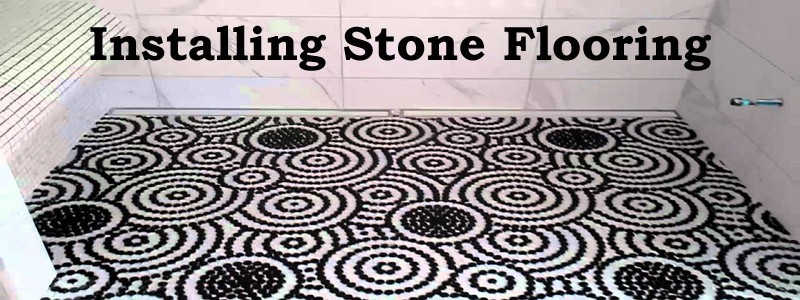
Installing Stone Flooring

Installing stone flooring is a bit more work than other types of flooring because of some of the necessary precautions and prep work, but the results are worth it. Whether you are installing slate flooring or installing marble flooring, you need to be do your homework first. Sandstone, flagstone and travertine flooring take the same preparation. Epoxy stone flooring is a bit of a different beast, and again, do your homework to make sure the application goes smoothly and the results are professional.

When you take into consideration the expense of owning it, installing stone flooring yourself may just seem like the right course of action to take. The problem is, though, that you need the knowledge to back up the will power.

It is essential that you invest the time and the money in learning how to do it as well as having the right tools. Failure to install stone flooring properly can and will lead to the stone cracking, becoming loose, or becoming uneven which can cause someone to fall and become hurt.


What’s Under There?

Installing stone flooring happens in the same way, whether you are installing slate or marble flooring, or virtually any other type of stone. The pieces of stone are either laid in their natural form or are made from real stone that is suspended in a polymer binder to create a tile like option. In all of these cases, the flooring needs to be laid carefully and accurately. If it is not supported or it is uneven, the finished product will not be that of high quality. And, you are increasing the risks of it breaking or chipping under pressure. No matter how hard the stone is, it can crack if it is laid improperly.

It is important to see what is under your foot when choosing stone flooring for your home. First, you need to take into consideration the weight of the stone. The heavier the stone, the more pressure you are placing on the structure of the building. In some cases, the weight may be too much. If you are concerned about this, it is wise to consult with a professional before making a selection. Often, a thinner layer of the stone tile can be used in place of the heavier options.

Secondly, when installing stone flooring, you need to think about what is directly below it. Because they are heavy and rigid, they need a very strong support system to keep them in place. The base product can not move or shift. Those applying stone on a wood subfloor need to reinforce it with another layer of plywood in some cases. Then a layer of tar paper is laid, followed by a wire mesh. A layer of mortar is then used (although a cement backer board can be used as well) to provide even more support. Then adhesive (the proper quality of course) is used to put the tiles in place.

If installation is to be over a concrete floor, you can use the same such methods or you can use a thin set adhesive.

In most professional projects, the installer is likely to use mortar bed. Also important to note is that in this case, the 3/4" plywood subfloor is the thinnest option.

A cement backer is a good option to use if you are looking for an easy to install solution. The subfloor needs to be 5/8" thick here. You will apply the cement backer board to the subfloor with an adhesive and screws. Your stone is then applied to the backer with thin set adhesive.

In virtually every type of stone flooring you will want to sealants over the top of the flooring. When they are applied before the grouting application, it becomes easier for you to keep the grout out of the cracks and grooves of the actual stone. Once the proper sealants are used, you can then grout the flooring.

There are many types of flooring from epoxy stone flooring to slate, marble, and flagstone. The proper installation of stone flooring will allow for your floor to last as long as possible. In most cases, properly installing stone flooring will allow it to last a lifetime.

Comments

Stone sealer - sealant creates a barrier on the surface of your stone floor that repels liquid and keeps spills and water marks from penetrating and damaging your stone floor. This treatment is the perfect finishing touch to any granite or marble installation works. This process is a must for the protection of all natural stones.

Stone Expert at March 30, 2008 3:59 PM

Dear Floorlady,
I am planning an addition to my home in Central NY state. One part of the addition is an entry/mudroom, unheated but enclosed and insulated. The other part is a screened porch, open to the elements.

My builder is planning a concrete pad for both. We have lots of options for flooring but I'd really like stone to match the fieldstone fireplace and drystack walls around the property.

I have so many questions. Does it make sense to put stone on top of concrete? Do I mean concrete or cement? Does the concrete/cement have to be laid on a slight grade? Will moisture cause the floor of the porch to crack and the stones to heave or become loose? Where can I find exact instructions on how to do this...there are a few stone masons around but I'd like to understand as much as possible before talking to them. Do you recommend slate or flagstone instead of fieldstone? If fieldstone is OK, can I use rocks I find myself (we have lots of rocks around here and, strange as it may sound, gathering them from creekbeds is a lot of fun....the local farmers call us "Rock Freaks".)
thanks.

Karen at June 15, 2008 8:49 PM

Hi Karen!
Wow! Lots of questions! ;o)

Yes, it makes complete sense to put stone on top of concrete. It provides something stable for the stone to sit on so that you will hopefully never have to experience 'heaving' stones.

I wouldn't think that the concrete has to be laid on a slight grade since the whole idea is to have a level floor, right? It will self-level somewhat and your builder will have tools to utilize to make it level. :~)

Slate may not be great choice unless you have a very good moisture barrier underneath - preferably under the concrete itself because concrete will draw moisture, which will ruin everything! You can really use any of the stones you want so long as you have a good moisture barrier underneath them and really good sealer & finish (multiple coats!) on top of the stone. Even the creek stone should be sealed or you'll be losing pieces/layers. In my experience there is usually layering associated with these stones.

Of course, I can't guarantee that the floor wouldn't heave/crack, but it will definitely reduce the chances.

Oh, and don't worry - you're not alone! There's lots of 'rock freaks'!

You're one smart cookie to want to know everything possible before you contract workers! Don't be afraid to utilize the site's search engine located in the upper right-hand corner and even at your favorite search engine (mine's Google!). Read, read, and read some more!

The Flooring Lady at June 15, 2008 9:26 PM

I am trying to lay a runner, which was made from my carpet on my stone stairs, which are solid precast stone. I wondered if you had any ideas for an adhesive that would be strong enough to hold the carpet on the stairs without damaging the stone. Obviously I would only apply the adhesive to small areas on the stairs necessary to hold the runner in place, but I would love some ideas...thank you!!

ireen at June 26, 2008 11:18 PM

You could try stair rods which attach to the stairs on top of the carpet- the runner is held in place by them. I've seen them in brass and stainless -- there may be other options. This option would let you remove the carpet runner for cleaning or redecorating. There are no VOCs from glue to worry about either!

The Flooring Lady at June 27, 2008 3:13 PM

Hello Flooring Lady,
I have just completed building brick and stone (sciota blue stone treads) front steps to my home. I'm a pretty experienced diy'er and the steps look great, but have run into a problem with the landing. For the landing, I "wet-set" irregular flagstone varying in thickness into mortar. They look great but I've run into a slight problem. I graded the landing slightly away from the front door as to avoid water run-off toward the house. However, when setting the flagstone into the mortar, due to the varying level of the stone, I have had some "pooling" in certain spots of the landing. When I leveled the landing, I used the high point of each stone instead of the low point as the point of reference, which has created some natural peaks and valleys on the landing. I was wondering if you knew of a clear gloss finish which would function as both a sealer and a self-leveling agent. Most sealers that I have looked into online seem to be brush, roll, or spray on. I'm wondering if there is something that may provide up to approx 1/8 - 1/4 inch of "filler" in some of the valleys of the landing. Any suggestions?

Frank at July 27, 2008 10:39 PM

Hi Frank,

I've never heard of any that are thick enough to act as the type of filler you need. Maybe somebody else has and they'll help us out by chiming in.

The Flooring Lady at July 28, 2008 10:03 AM

Dear Flooring Lady,
I am converting a 5x13 room in my basement into a wine cellar. I am using natural flagstone to do the walls and the floor. I have the vapor barrier and the galvanized metal lath for the walls and it has a concrete floor. I have a couple of questions since I am new to this and the guy helping me has only done brick before.
1 Do I do the walls first and then the floor? I was planning on using a 1x2 on the base of the wall that I would remove after I do the walls which leaves room for the flooring. (also doing that on the ceiling and around the door.) Is this a good idea?
2 Can I set the stone directly on the concrete floor or do I need a moisture barrier there also?

Thank you for your help.

JW at August 11, 2008 7:58 AM

Hi JW,

This sounds more like a question for somebody who deals more in construction since you're dealing with floors and walls. It sounds like it'd be a good topic for me to investigate/learn for myself. This part of the site will help explain about different moisture barriers.

I would think it'd be easier to lay the floor first to avoid a gap at the base of the wall, but that's up to you, especially since I don't have a clue as to any of the specifics about the flagstone you're working with.

I did a little Google-ing using this search: "how to" build "wine cellar" - interesting stuff. I think you'll find this to be very helpful in particular. Sounds like a neat project. Good luck!

The Flooring Lady at August 11, 2008 8:26 PM

I am remodeling a powder room with 24 12x12" sand stone tiles that i have put 2 coat of sealer prior to install.My question is:-"When i put the sealer on the tile i liked the look it made but after drying it when back to the original state.Is -it possible to keep that wet look?
thank you.

Marie

Marie at November 12, 2008 7:15 AM

Hi Marie,
Yes, it is! What you need to use is a high-sheen or glossy sealer or finish. AquaMix has a wonderful line of products of sandstone flooring. The biggest thing to worry about is making sure that whatever product you use next that it will be compatible with the sealer you've already applied. Have the info for the sealer you've used readily available and give AquaMix a call - you don't want to mix products that aren't chemically compatible or it'll ruin your finish, give you an ugly finish and possibly damage your flooring. There's a toll-free number at the website.

The Flooring Lady at November 13, 2008 7:35 AM

I would like to apply flagstone to the wooden entry steps to my house. The wood is 2" x 12" and the steps are about 5 1/2" deep with space left to equalize the risers at the top step onto the Hardie plank porch. Should I use a sub flooring like Hardie backer or would mesh and mortor do the trick? Thanks

KAAREN at November 14, 2008 1:47 PM

Hi Karen,
I suppose it would depend on how much reinforcement the steps already have under the wood. Sounds like they're pretty sturdy already though and I would tend to think that you'd do ok with the hardbacker (hardie backer).

The Flooring Lady at November 15, 2008 7:41 PM

Hi :),

We just started installing polished stones in our entry way. however, the color does not look as shiny as what we saw in the store and I am starting to think that they gave us a non polished stone!!! how can i tell it is polished and do you think enhancing and sealing it would help?

thank you so much,any ideas would help.......

Sam at November 27, 2008 4:18 PM

Hi Sam,
Enhancing and sealing may help, though if it's pre-sealed you will have to strip them first and if they're not sealed, they really should be before you install them to make it easier to remove grout residue.

I would suggest taking one of your tiles to where you bought them from and comparing them. I can't tell if they're really polished or not since I'm not there. If you aren't happy with what you received vs. the store display, then by all means raise a ruckus with them!

Good products for your stone can be found at bioshieldpaint.com - good luck!

The Flooring Lady at November 30, 2008 6:30 PM

Thank you so much for letting me know what I need to do to seal my floors. I did by a product that is called pre-grout sealer. on the box is say to apply if before putting grout and I showed the product to my installers and they said it is not necessary to do that since grout will fill all the holes on the stone and that is what it is for. I am in a cross road. should i pre seal or not? I can not tell if they were pre sealed and am not sure how to remove the seal after grout and reseal again!!! thanks

sam at December 3, 2008 12:08 PM

Sam, what kind of stone flooring do you have? Some types of stone have little low spaces that can be filled in with grout and then sealed, but this is usually done by the manufacturer. I've also heard of a lot of people complain about the little pieces of grout popping out, most likely due to expansion/contraction, which normally isn't a problem, but like I've stated, I have heard of it here on this site.

Basically, if it's pre-sealed, you shouldn't have any problems. Easiest way to determine this is to put a few drops of water on the stone. If the stone absorbs the water, then it's not sealed.

If you have natural imperfections (little dips, pits, etc.) in your stone and this is what you like, then your installer really shouldn't get the grout in it and then seal if the tile isn't already pre-sealed. Make sure he does a thorough job of removing any grout residue so you don't get any white grout haze, which wouldn't be noticed until he seals the floor. The only remedy for this is to strip and reseal. Good luck!

The Flooring Lady at December 4, 2008 8:57 AM

Good Day!

I was thinking of using some beautiful but thick stone (1 to 1 1/2 inch thick stone on an existing patio that has a concrete base now. Is this stone to big and if not how much grout foundation do I need to put down to hold these stones in place. The area is around 300 sq feet.

Thanks so much

john at December 27, 2008 7:07 AM

Hi John,
You might want to try to find some sort of patio or outdoor landscaping type site to ask this question. I should think that the stones are fine, but wouldn't have a clue as to what would be proper to set them in outside. You'd definitely need something heavier than a thin set mortar. Sorry for a lame answer, but this site is for flooring within a home - though on ocassion we can help with patio situations where the flooring has already been laid - like help with cleaning and such.

The Flooring Lady at December 27, 2008 12:52 PM

Hello,

I am planning to floor my bathroom myself and I have 3/4" thick subfloor. It is an old house with original hardwood in the hall that meets the bathroom floor(linoleum). I bought 1/2" backerboard as a (novice) thinking I would apply it to the subfloor. The problem is if I put the mortar, backerboard, and tile on the floor, I am going to have quite an incline between the bathroom and the hall. Even if I take out the subfloor and put the 5/8" subfloor and use 1/4" backerboard...with the tile I will still have an incline. Do you have any suggestions for a smooth transition from tile to the hardwood?

Cindy at March 1, 2009 9:04 AM

Hi Cindy,
What you'll need is a transition strip where the bathroom and hallway flooring meet. As far as an getting them both to be the same height -- isn't going to happen.

The Flooring Lady at March 1, 2009 1:03 PM

Hello,
I am going to be installing flag stone at the front entrance of the inside of my house, a section that is about 6’ by 6’. The rest of the room has ¾” thick walnut flooring that I have installed about two months ago. I have planed to have a smooth transition between the stone and wood, and to achieve this I have installed the appropriate thickness of underlayment beneath the hardwood. My question to you is: can I but the stone directly against the hardwood, or do I need to leave a gap to allow for wood expansion and contraction? If a gap is require, what are my options?

Thank you
Gary

Gary at March 27, 2009 10:53 AM

Hi Gary,
It should be ok to butt them up, and I say this based on the assumption that this area will be pretty much climate controlled and that the walnut flooring is nailed. Most people prefer to use a transition strip as it protects the edges where the two different flooring types meet. You're most likely going to have an issue with dirt/dust getting trapped where the two floors meet without a t-strip no matter how close you can get the two flooring types.

The Flooring Lady at March 27, 2009 8:47 PM

Hello, I'm thinking of putting irregular flagstone in an addittion. I used TJI's 14 7/8 1' on center and 3/4" MDF T&G for flooring. I'm going to have the stone cut between 1/2 to 3/4 of and inch. It's about 900sq. total. Would it be better to use a cement backer board like hardybacker or 30lb felt and wire mesh.

Thanks Matt

Matt at May 6, 2009 9:07 AM

Hi Matt,
It sounds like you did a very good job on making a very stable base. It sounds like it would be strong enough that you can use hardybacker under it rather than having to use the felt/wire mesh.

The Flooring Lady at May 7, 2009 9:04 PM

I am going to lay a 900 sq ft. living room floor (new construction) of natural stone 3/4" to 1 1/2" thick stones. The base is a solid concrete slab. would you lay the stone directly on the slab, and what mortar mix is appropriate and how thick. I have done lots of rock laying but no flagstone before. Thanks, Wayne

WAYNE at May 14, 2009 7:37 AM

Hi Wayne,
You'd want at least a medium set mortar for laying it. I would recommend using natural stone that is more uniform in thickness though.

The Flooring Lady at May 14, 2009 10:48 PM

Hello. I am planning to install natural stone on a 8'h x 7'w painted brick fireplace wall. What would be the process since the brick is painted?

~Mike

Mike at May 23, 2009 2:18 AM

Hi Mike,
For best adhesion, I would recommend stripping the paint off of the brick.

The Flooring Lady at May 25, 2009 12:47 PM

Hi, this is going to sound awful, but have a section of flagstone floor that really is past its best, so wish to lift, use the better pieces elsewhere in the house, but concrete the section that is coming up and then tile. The existing base is just sand. Any ideas what I should do with this area with regards damp proofing this area? Any info appreciated Jackie

Jackie Strong at June 7, 2009 12:56 PM

Hello,

I am remodelling a master bath and plan on installing, limestone natural tile. When remodelling I had to remove an old ceramic floor which was installed with a wire mesh and mortar. I do not wish to reinstall the mesh system but want to use a cementboard backer instead. My subfloor is in good condition and I have replaced sections where water damage was apparent.The sub floor is a minimum of 5/8" thick. Would using a cement board be sufficient?

In addition, I am installing a focus wall of natural stone which comes in precut sections and is approxiamatley 4cm thick (I am in Canada). What type of adhesive would you use to apply this wall? (the sections are fairly heavy).

Jerry at June 9, 2009 12:52 PM

Hi Jackie,

Where in the house is this flooring? Where do you live? Are you tired of the flagstone or would a good refinish bring it back to life?


You can read about various moisture-proofing approaches at: http://www.theflooringlady.com/moisture_proofing/

The Flooring Lady at June 13, 2009 1:53 PM

Hi Jerry,

I don't have experience with the wire mast and mortar, though I've seen it in older homes. I'd think the backerboard would be sufficient. That's what I have in my bathroom and it's holding well.


I don't have experience hanging stone on wall surfaces. It seems to be something's needed to strengthen the wall too.

The Flooring Lady at June 13, 2009 2:10 PM

hello, I'm building a house and the homeowner has specified crab orchard flagstone for the entire house inside and outside . The house is on a conventional floor system I'm not to worried about the inside of the house but very concerned about the balconies which are exposed to the elements I would like to use plywood for the subfloor but wonder how to accomplish the waterproofing of the subfloor.

freddy rodriguez at June 15, 2009 2:51 PM

Hi Freddy,

You do indeed need to put good weatherproofing down on the plywood. You could do a "blow down" asphalt-like layer before laying the flagstone on top, or you could use Bitchathane, or some other rubber membrane, as the layer between the plywood
and the flagstone.


It sounds lovely. I hope it works out for you.

The Flooring Lady at June 18, 2009 12:50 PM

Hello,

I am having a natural stone (Travertine) installed in the kitchen. Currently I have a "tile" look Linolium on the floor. Is it okay to lay the stone directly over the Linolium or should I have the Linolium removed first? The Linolium is directly on top of concrete. Will the Linolium hinder a proper adhesive seal if not removed or create a better water barrier if it remains and place the Travertine on top? FYI: The Travertine is a Tumble Travertine.

Thanks!

ron at September 11, 2009 1:47 PM

Ron,

You sure can lay it right over, IF you are positive the linoleum won't lift, that it has been properly glued down to the concrete without gaps or air bubbles. You would still have to use a thin-set for the new tile so the travertine will adhere properly.

The Flooring Lady at September 14, 2009 11:04 AM

I have made a Flagstone Porch that I have mortered. I'm now looking for either clear epoxy or polyurethane to pour over it. Birmingham stumped.

KC at October 18, 2009 10:24 AM

KC,

I would recommend the water-based Diamond Coat Varathane Polyurethane to apply over it.

The Flooring Lady at October 21, 2009 10:02 AM

We own a mid century home with an original application of flagstone slate for an entry way. We have a couple of flagstone tiles that are loose (each tile is probably about 16"x8" and mostly rectangular in shape). I plan on removing them for repair and reusing. What type of mortar should I use to reset as well as grout (and any other tricks I should know about)?

Thanks!

Greg

Greg at October 25, 2009 7:10 PM

Greg,

Most home centers should have some type of motar repair adhesive you can use to reset a stone or two. If you do use new grout on those two stones, it may not match the rest of the area. Also, to protect the stones, you may need to reseal them.

The Flooring Lady at October 27, 2009 10:02 AM

Hi. I have a cabin that was built in 1860 and the floor is rock which we think was collected from around the property. It is laid tightly over a dirt/clay floor. I have been investigating ways to seal the floor and came across your website. I really don't want to pull all the rocks up in this process, it would be hours and hours of extra work. Is it possible for me to seal the floor with the Diamond Coat Varathane Polyurethane without having cement under the rock?
Thanks for any advice you can give.
Cynthia

Cynthia Drummond at November 12, 2009 8:09 AM

Cynthia,

In virtually every type of stone flooring you will want to apply sealants over the top of the flooring.

But, I would check with the manufacturer to be sure that any moisture coming through the stone will not harm the sealant.

The Flooring Lady at November 18, 2009 10:37 AM

Hello Floooring Lady,
I am installing 3/4" flagstone in an entry way and 1" as floor protection for a woodstove. The stone will be set on a cement backerboard.

1. What is the minimum depth of mortar recommended?

2. Is the best means of application like tile in which the mortar is spread on the backerboard and a final pass is made with a notched trowel?

3. If a notched trowel is used, what size notch would be recommended?

4. Is the grout the same as what is used for tile?

5. Do you have any special techniques to get the best adhesion when setting the stone?

Thanks in advance,
Lonnie

Lonnie Crotts at November 20, 2009 3:28 AM


Copyright © 2005 - 2010 by Sage Blossom Consulting, Ridgway Colorado.
All Rights Reserved worldwide. May not be copied, stored or redistributed without prior, written permission.